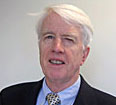
Mike is a financial guru. He has more than 50 years
experience as a Director, Advisor, financial consultant, CFO and auditor. He has
helped companies deal with issues involving corporate oversight,
financial management, financial reporting, forecasting and financing.
His financial tools have been adopted by hundreds of companies, and
he speaks frequently on finance and entrepreneurship. Click
here to read some of his comments.
Mike has served on the Boards of Directors or advisors
of more than thirty five companies. Many of these companies have realized liquidity
events, either a sale or IPO. To read more about Mike's experiences, click
here.
Mike has consulted to more than 100 companies. He offers a full range
of CFO services, from helping with financing to negotiating sales
and acquisitions.
in the DEN
Newsletter (Dartmouth Entrepreneurial Network). Go
to page 17.
During summers, Mike and Betsy work at the Information Booth on the Dartmouth Green.
Mike and Betsy were featured in a WMUR TV broadcast, a Valley News article and a WNTK talk radio interview about the 2014 Boston Marathon.
In January 2014, Mike was featured in the Running Times article “Earning Mountain Goat Status”, which reported on mountain running in New England
Mike was interviewed for a CFO Magazine article on the craft-beer market. September 2012
Market meltdown – one year later – NECN
interviewed Mike for his comments on the market. August 2012
The Valley News published Mike’s
comments on how entrepreneurs can comply with state sales taxes in
August. See
the comments here. August 2012
Mike spoke on the financial aspects of mergers and
acquisitions in a teleseminar hosted by Indigo Venture law
offices. August 2012
Another
Dismal Day on Wall Street - NECN
"Mike Gonnerman is going to ride it out....." August 2011
Mike contributed to From Idea to Success,
the Dartmouth Entrepreneurial Network Guide for Start-Ups, authored
by Gregg Fairbrothers and released in August 2011
The Fall 2010 Accelerated
Cure Project newsletter carries a front-page profile of Mike
as an "all-star volunteer." Nice people, good cause.
In April 2016, Mike led an accounting discussion group at the Dartmouth
Entrepreneurs' Forum.
In October 2014 Mike joined the board of trustees of Dartmouth Regional Technology Center
In November 2013 Mike was a reviewer for the Advanced Entrepreneurship course’s final presentations at Tuck School of Business
In April 2013, Mike joined the Investment Advisory Board of Ledyard Financial Advisors
In April 2012, Mike and his wife Betsy were featured in a Metro
West Daily News article on the Boston Marathon.
In January 2012 Mike was a guest lecturer at Boston University's course
on entrepreneurial finance.
In November 2011 Mike was a panelist at the MIT
Enterprise Forum Startup Clinic
In April 2011, Mike and his wife Betsy were featured in a Boston
Globe article on the Boston Marathon.
In October 2010 Mike gave a talk about entrepreneurship at Year
Up Boston, a program that helps young adults 18-24
prepare to enter the work force.
On March 26, 2010, Mike celebrated his 20th
anniversary as an independent financial advisor.
That's a long time for anyone these days to hold the same job
(without a promotion, too!) but it's been a wonderful experience.



 Home
Home